


PalmWatchTower Spine Navigation System preoperative planning screenshotPalm Fron

WatchTower Spine Navigation System: An Economic Solution and Reduced Radiation Exposure for Your Clinical Needs

The WatchTower Spine Navigation System’s atraumatic registration enables you to perform the cases you want to do, at the service sites you prefer. Captiva Spine offers multiple acquisition plans to facilitate the installation of a WatchTower Spine Navigation System at your ambulatory surgery center (ASC) or hospital.

Overview of the WatchTower Spine Navigation System

Precise:

Achieve greater precision in implant placement compared to traditional X-ray methods, reducing the risk of misalignment.

Efficient:

No intraoperative CT scanning or open exposures; virtually eliminates radiation with limited X-ray exposure. WatchTower was designed to support consistent performance across a range of lumbar spine procedures without requiring major changes to existing clinical workflow.

Percutaneous:

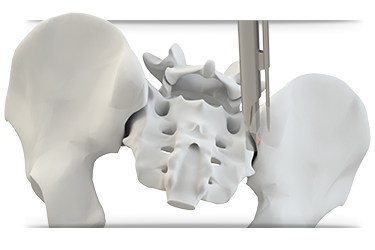
WatchTower performs 2D-to-3D registration using standard fluoroscopic imaging. This approach supports a familiar intraoperative setup and enables surgical teams to align pre-operative CT data with intraoperative 2D images.

This workflow is also designed to support reduced radiation exposure, as it leverages low-dose C-arm imaging rather than intraoperative CT scanning.

Cost-Effective:

Avoid the high cost of purchasing and maintaining a CT scanner. Our solution leverages your existing X-ray equipment for registration, delivering the same precision without requiring additional investment.

Open Platform:

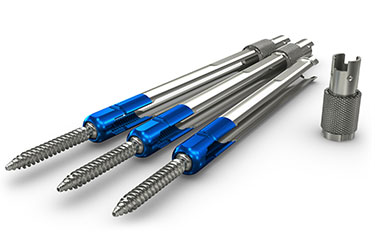
Compatible with a wide selection of instruments and implants. To see more products from Captiva Spine, click here>

1
2
3
WatchTower Spine Navigation System ROAM unit overview full view
1

Touch Screen

2

Optical Tracker

3

Small Footprint

PRECISE | EFFICIENT | PERCUTANEOUS | COST-EFFECTIVE | OPEN PLATFORM

WatchTower Spine Navigation System preoperative planning screenshot

Reduced Radiation Workflow and Preoperative Planning

The platform operates using preoperative CT images to support intraoperative guidance and visualization. The system allows users to reference 3D anatomical structures from the CT dataset and make pre-operative and intraoperative adjustments to screw trajectory and depth. This workflow is designed to integrate seamlessly into the surgical environment, eliminating the need for intraoperative CT and requiring minimal setup.
WatchTower Spine Navigation System 2D-to-3D registrations screenshot

Fast and Accurate 2D to 3D Registration

WatchTower leverages a preoperative CT scan, combined with two standard 2D fluoroscopic images. This is to achieve accurate patient registration, thereby eliminating the need for intraoperative CT scans. By utilizing existing imaging modalities and aligning them through proprietary software, the WatchTower Spine Navigation System delivers real-time instrument guidance with precise spatial correlation to the patient’s anatomy.

This workflow significantly reduces intraoperative radiation exposure for both staff and patients by eliminating the need for continuous fluoroscopy and high-dose intraoperative CT scans. It supports a safer, more efficient surgical environment while preserving visualization and accuracy.

WatchTower Spine Navigation System logo with a lighthouse

FREQUENTLY ASKED QUESTIONS ABOUT WATCHTOWER SPINE NAVIGATION

No. The WatchTower Spine Navigation System is designed to work with the standard C-Arm fluoroscopy systems already found in most OR and ASC environments. Because the system performs 2D-to-3D registration using fluoroscopic images, it does not require the facility to purchase intraoperative CT or other advanced imaging systems. This allows most surgical centers to implement navigation without modifying their imaging infrastructure.

WatchTower uses standard 2D fluoroscopic imaging rather than intraoperative CT acquisition. This workflow design reduces radiation exposure during navigation by relying on C-arm imaging already present in most surgical environments.

The 2D-to-3D registration uses a small set of standard fluoroscopic images to align them with a patient’s preoperative CT scan. The WatchTower Spine Navigation System identifies anatomical landmarks in 2D images. It then matches them to their corresponding structures in the 3D CT dataset and establishes a precise navigation map. Once aligned, instruments can be tracked in real time without requiring an intraoperative CT, allowing surgeons to work with familiar imaging while maintaining 3D awareness throughout the procedure.

Why it matters in an ASC/Underserved Hospital environment:

  • Uses the C-Arm your facility already has (for the WatchTower Spine Navigation System; currently supported are 9” and 12” round C-Arm image intensifiers, as well as 21cm and 31cm square C-Arm image intensifiers). Read more here>
  • Enables real-time 3D navigation without intraoperative CT
  • Supports lower radiation exposure
  • Accelerates setup and workflow
  • Fits ASC economics while delivering high surgical value

Yes. The WatchTower Spine Navigation System is designed to integrate with a broad range of spine instrumentation and implant systems. Its open platform supports compatibility across lumbar procedures. This approach allows facilities and surgeons to maintain their preferred implant systems while incorporating navigation into existing procedural workflows. WatchTower supports both open and percutaneous spine procedures.

The registration method and algorithm used in WatchTower were the subject of a recent randomized study comparing it to an intra-operative CT scan-based system. A team led by Jau-Ching Wu MD, PhD, a Neurosurgeon at Taipei Veterans General Hospital and Assistant Professor at the National Yang-Ming University (et al.) has published a study in the Journal of Neurosurgery: Spine (JNS)1, “Comparison of intraoperative cone-beam CT versus preoperative fan-beam CT for navigated spine surgery: a prospective randomized study.”  The study highlights the clinical utility and benefits of the unique registration method compared to a commonly available intra-operative CT-based navigation platform. The study concludes that the preoperative CT-based spinal navigation system matches the accuracy and safety of the conventional CT-based intraoperative system. Additionally, it offers the advantages of a more rapid workflow and lower intraoperative radiation exposure.

For ASCs, the right navigation solution must elevate precision, accelerate workflow, and stay financially aligned with outpatient economics. The most effective systems are those designed to plug into existing imaging, minimize radiation exposure, and keep case times predictable.

The WatchTower Spine Navigation System was designed with these realities in mind. Its streamlined setup, familiar imaging workflow, and efficient registration pathway support high-throughput environments where every minute matters. The system’s open platform also gives facilities flexibility across implant systems, approaches, and surgeon preferences, making it a scalable solution for a full spine portfolio rather than a single-procedure tool.

When evaluating options, look for a system that reduces complexity, aligns with how your surgeons already work, and enhances consistency across teams. That’s where WatchTower continues to resonate with ASC leadership: practical, efficient, and purpose-built for today’s outpatient surgical environment.

REQUEST A WORKFLOW EVALUATION

Navigation Enquiry

 Your information is our secret and ALWAYS safe with us.

0 + 1 = ?

LATEST SPINE NAVIGATION NEWS

Captiva Spine Announces FDA Clearance for Flat-Panel C-Arm Image Calibrators and AI-Assisted Registration for WatchTower Spine Navigation, Advancing Efficiency, Radiation Reduction, and Future-Ready Access

/by Captiva Spine

Captiva Spine’s WatchTower Spine Navigation Platform Enhancements Accelerate Clinical Adoption

/by Captiva Spine

Captiva Spine Announces First Navigated Office-Based SI Fusion Procedure Using WatchTower ROAM Spine Navigation System and TransFasten-PSF Posterior SI Fusion System

/by Captiva Spine

Captiva Spine Introduces ASC-Ready WatchTower ROAM, a Compact, Mobile Spine Navigation System Following the Publication of a Prospective Randomized Comparative Clinical Study of Accuracy and Safety Data

/by Captiva Spine

Captiva Spine Shares the Publication of a Prospective Randomized Comparative Clinical Study of Accuracy and Safety Data in line with the WatchTower Spine Navigation System

/by Captiva Spine

Watch The Video! WatchTower: Revolutionizing Spinal Navigation; Captiva Spine Discusses The New ASC-READY Spine Navigation System At NASS 2023

/by Captiva Spine

Captiva Spine Completes WatchTower Spine Navigation System’s First ASC 3D Navigated MIS Pedicle Screw Series in the U.S. Using 2D Percutaneous Registration

/by Captiva Spine

Captiva Spine Announces Completion of First U.S. Cases with the New WatchTower Spine Navigation System, “A game-changer for facilities doing spine surgery.”

/by Captiva Spine

Captiva Spine Expands Management Team to Support Roll-out of the New WatchTower™ Spine Navigation and Robotics System

/by Captiva Spine

OUR PRODUCTS